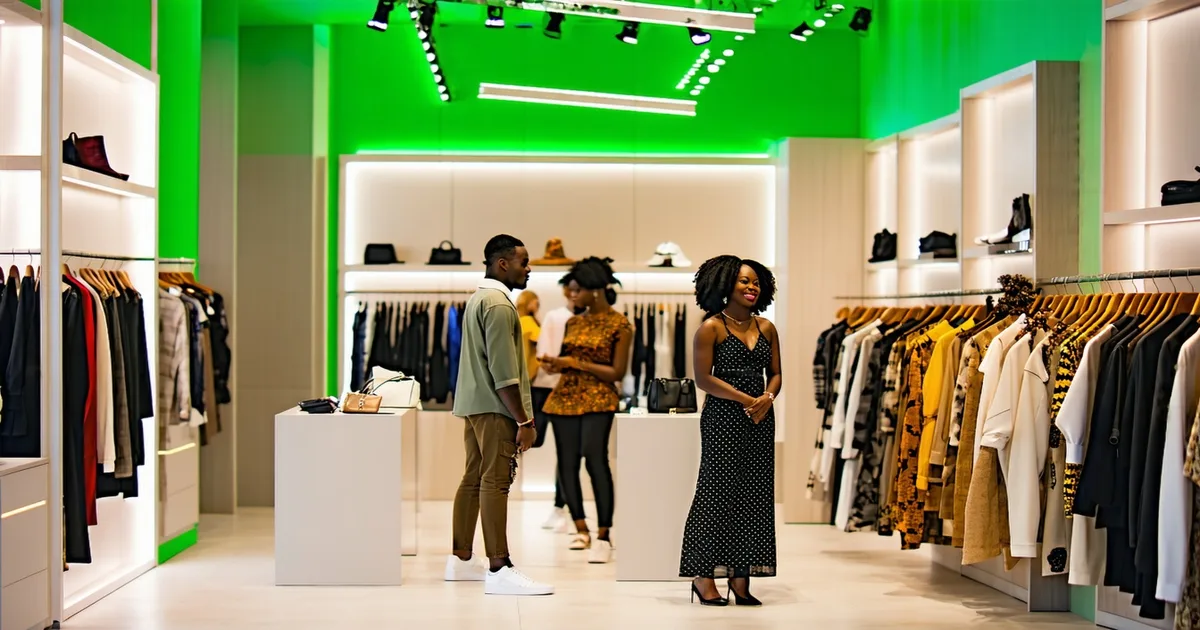
Fashion is the category where BNPL was born and where it still performs most strongly. In the Australian and UK markets that pioneered BNPL at scale, clothing and footwear consistently account for 35–45% of BNPL transaction volume. In South Africa, the picture is directionally similar — and the reasons are deeply tied to how South African consumers relate to fashion as a category, not just the mechanics of split payment.
Why Fashion and BNPL Are a Structural Fit
Several characteristics of the fashion category make it particularly suited to BNPL adoption.
First, fashion purchases are frequently aspirational rather than purely functional. A shopper needs new jeans, but the jeans they actually want are R1,400 rather than R650. The R750 gap between the affordable option and the preferred option is precisely the kind of gap that BNPL bridges — and where split payment converts an "I'll come back when I have more money" into a purchase today. The merchant captures the sale at the margin they wanted; the shopper gets what they actually prefer.
Second, fashion has strong seasonal and trend cycles. Unlike appliances or electronics — where a six-month delay does not materially affect the product — fashion items are time-sensitive. A jacket you want in April has lower relevance by August. This urgency amplifies the willingness to use credit-like mechanisms to capture the purchase in the right window.
Third, fashion has a return-friendly culture. Consumers are comfortable trying at a slightly higher price point when they know they can return what does not work. BNPL providers in markets with low return rates generally see better default profiles in fashion than in electronics — partly because the item itself has resale value, and partly because fashion shoppers tend to be engaged consumers who manage their accounts carefully.
The South African Fashion Retail Context
South Africa has a distinctive fashion retail landscape. On one end, large national chains dominate accessible price points — a category that has traditionally served the LSM 5–8 consumer through store credit facilities. On the other end, a growing mid-market independent and boutique sector has expanded significantly, particularly in Cape Town, Johannesburg, and Durban, serving a consumer who is not underserved by credit but who actively prefers BNPL to putting fashion on a revolving credit card balance.
The boutique and independent mid-market is where BNPL growth in SA fashion has been fastest. A small clothing shop in Johannesburg's Maboneng Precinct or a surf-and-lifestyle brand operating online out of Cape Town typically cannot offer their own store credit card — the cost and regulatory overhead is prohibitive. BNPL gives them access to the same payment flexibility mechanics that the large chains have always offered, through a third-party provider, without the capital or compliance burden of running their own credit book.
Consider a scenario: an independently operated womenswear boutique in Pretoria with an average transaction value of R1,600. Before adding BNPL, their checkout conversion rate sits around 42% for shoppers who arrive at the cart page. After enabling split payment and adding per-instalment pricing on the product page, conversion lifts meaningfully — and the share of transactions in the R1,400–R2,200 range increases as shoppers trade up to their preferred items rather than compromising. This pattern is consistent across mid-price independent SA fashion retailers who adopt BNPL properly.
Integration at the Physical Till vs Online
SA fashion retail is still heavily physical. While online fashion has grown substantially since 2020, a significant portion of fashion revenue flows through physical stores, particularly outside major metro centres. This means BNPL adoption in fashion is not just an e-commerce story.
In-store BNPL typically works through a QR code or short URL presented at the till. The shopper scans the code, completes the BNPL approval flow on their phone, and the merchant receives a confirmation before releasing the goods. The process adds a few minutes to the checkout experience, which is a genuine friction point compared to tap-and-pay. Merchants who manage this well train their staff to initiate the BNPL conversation before the shopper reaches the till — while they are still browsing or trying on — rather than introducing a new payment flow at the moment the queue is forming.
Online fashion integration is more straightforward. With a WooCommerce or Shopify plugin, BNPL appears as a payment option at checkout alongside card and EFT. The instalment breakdown displayed on the product page is the primary conversion lever — merchants who add this and then forget about it consistently underperform compared to those who actively promote the availability of split payment in email marketing, social content, and in-store signage.
Return Handling: A Frequently Overlooked Issue
Fashion has higher return rates than most categories, and BNPL adds a layer of complexity to refund processing that merchants should understand before enabling it.
When a consumer returns an item purchased through BNPL, the standard process is that the BNPL provider reverses or adjusts the outstanding payment schedule and, where applicable, refunds instalments already collected. The merchant's settlement is debited accordingly. The specifics vary by provider, but the consumer should never be in a position where they have returned goods and still owe the full instalment schedule — the credit agreement should adjust in proportion to the return.
We are not saying BNPL makes returns more complicated than traditional credit. We are saying the return flow requires explicit coordination between the merchant's point-of-sale system and the BNPL provider's adjustment process. Merchants who integrate carefully and test their return workflow before go-live avoid the customer service problems that arise when returns are processed manually without a clean system link.
Seasonality and Promotional Activation
Fashion merchants who see the strongest BNPL performance tend to lean into seasonal activation. The December–January period, when South Africa's largest spending windows coincide with school preparation costs, is a natural moment to lead with BNPL messaging. The same applies to the back-to-university period in late January and the winter season mid-year, when higher-priced outerwear enters the range.
During Black Friday and the broader November promotional window, BNPL can serve a counter-intuitive function: it makes the promotional price feel even more accessible, rather than simply compressing margin. A R1,800 jacket at R1,440 (20% off) split into four payments of R360 is a genuinely attractive proposition — and unlike a straight discount, the BNPL structure does not train the consumer to wait for the sale price before buying at full margin during the rest of the year.
The SA fashion market still has significant room for deeper BNPL penetration. The category alignment is strong, the consumer appetite is there, and the regulatory framework is in place. What is missing for most independent fashion retailers is not the will to adopt BNPL — it is the practical knowledge of how to integrate it and make it work in both their online checkout and their physical stores.
FloatPay works with SA fashion retailers online and in-store. See how merchants get started.